The Soul of the Greek Table: How to Make the Perfect Authentic Moussaka
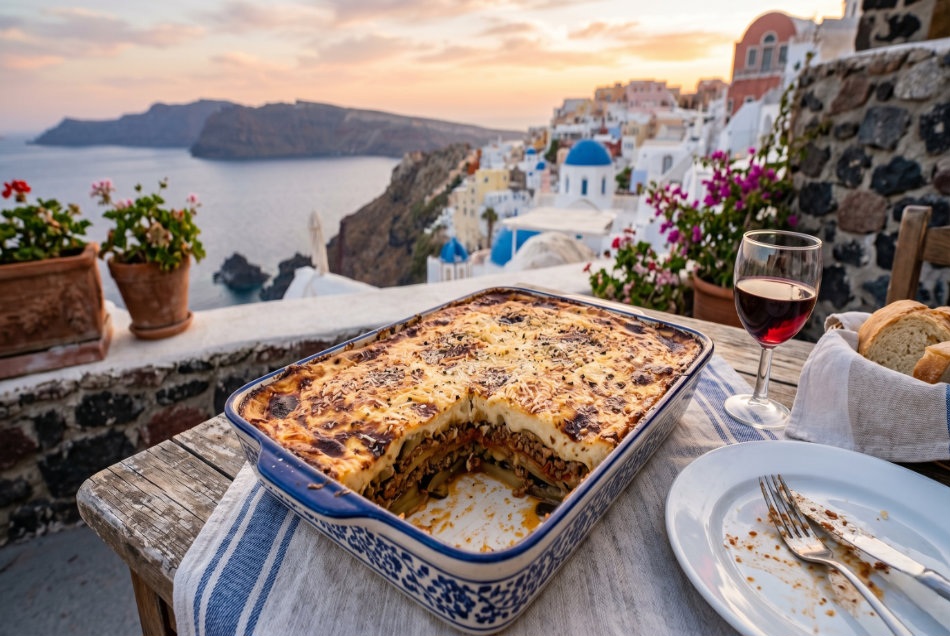
Kalos ilthate! Welcome to the Greek Grapevine kitchen. If you close your eyes and think of the quintessential Greek Sunday dinner, what do you smell? You smell the warm, woody aroma of cinnamon and cloves. You smell the rich, earthy scent of roasting eggplant. You smell the creamy, nutmeg-laced promise of a golden béchamel. You are smelling Moussaka.
Moussaka is more than just a dish; it is a labor of love. It is the "King of Greek Casseroles," a masterpiece of layering that requires patience, meraki (doing something with soul, creativity, and love), and a glass of Vidiano wine by your side while you cook. In Greece, we don’t rush a Moussaka. We craft it. Today, I am going to walk you through the steps to creating a Moussaka that would make any yia-yia proud—one with structural integrity, deep flavors, and that legendary velvet topping.
The Architecture of a Masterpiece: Understanding the Layers
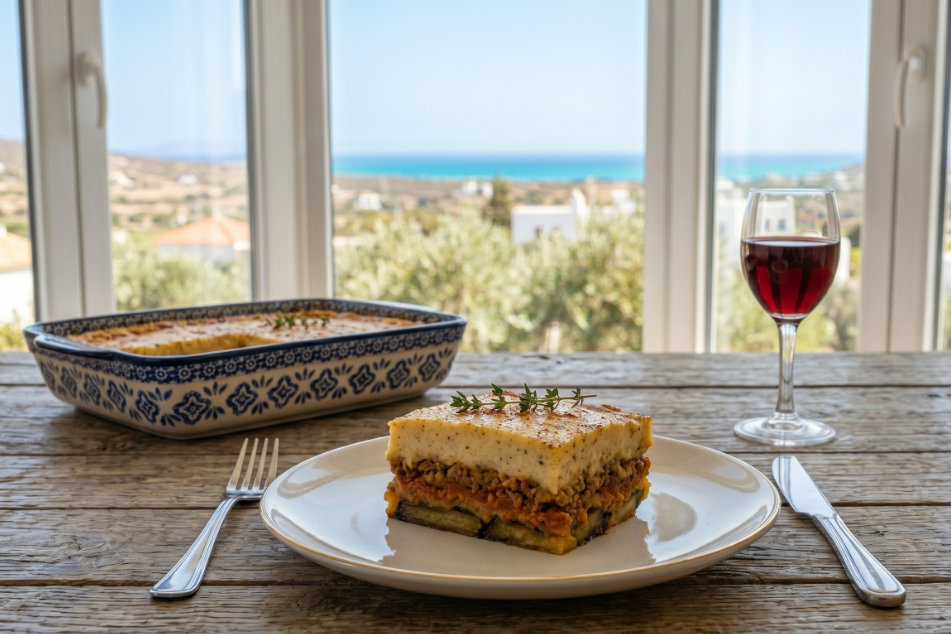
A perfect Moussaka is built on three distinct pillars. If one fails, the whole structure suffers. First, we have the foundation: the vegetables. Traditionally, this is sliced eggplant, though many regions (and my own mother) swear by a thin bottom layer of potatoes to help soak up the juices and provide a sturdy base.
Second is the heart: the meat sauce. This isn’t a Bolognese. It is a thick, aromatic ragu made with either ground lamb or beef (or a mixture), simmered until the liquid has evaporated, leaving behind a concentrated essence of Mediterranean spices. Finally, we have the crown: the Béchamel. In Greece, we like our Béchamel thick, almost like a savory custard, which browns beautifully in the oven to create a "soufflé" effect.
Ingredients for an Authentic Greek Experience
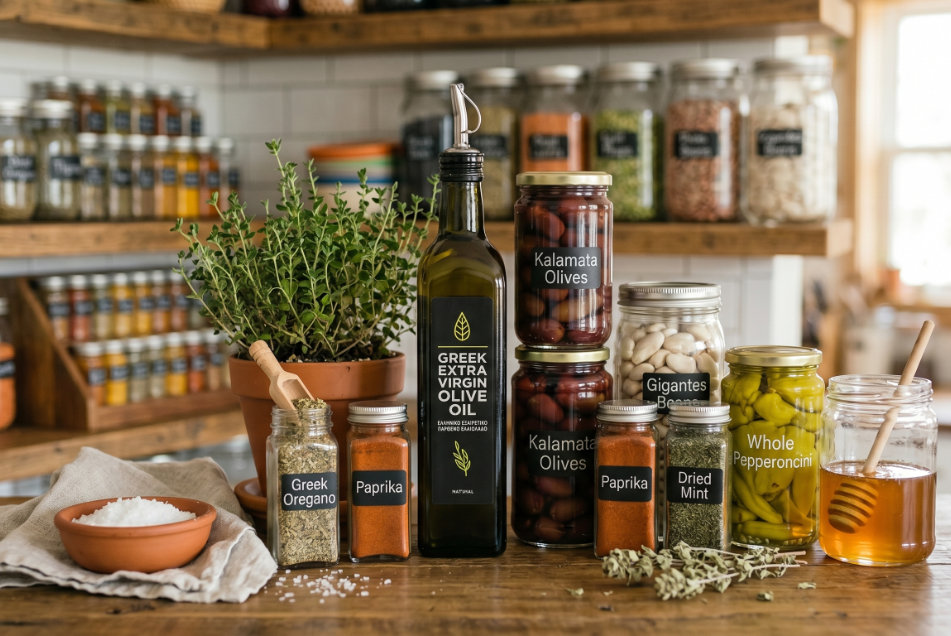
Before we begin, gather your ingredients. Quality matters here. Use the best olive oil you can find—extra virgin, preferably from Crete or the Peloponnese.
For the Vegetable Base:
- 3 large eggplants (firm and shiny)
- 2 large potatoes (optional, but recommended for stability)
- Salt for sweating the eggplants
- Olive oil for brushing
For the Meat Sauce (Kimas):
- 1.5 lbs (700g) ground beef or lamb
- 2 medium red onions, finely chopped
- 3 cloves of garlic, minced
- 1 can (14oz) crushed tomatoes or 3 fresh grated tomatoes
- 1 tbsp tomato paste
- 1 cinnamon stick
- 1/2 tsp ground allspice
- A splash of dry red wine (Agiorgitiko is perfect)
- Salt and freshly cracked black pepper
For the Béchamel Sauce:
- 4 cups whole milk (room temperature)
- 6 tbsp unsalted butter
- 6 tbsp all-purpose flour
- 2 egg yolks (the secret to the golden color)
- A pinch of nutmeg
- 1 cup grated Kefalotyri or Parmesan cheese
Step 1: Preparing the Vegetables with Patience
The biggest mistake people make with Moussaka is sogginess. To avoid this, we must treat the eggplants with respect. Slice your eggplants into 1/2-inch rounds. Sprinkle them generously with salt and let them sit in a colander for 30 minutes. This "sweating" process draws out the bitterness and excess moisture.
While the eggplants sweat, peel and slice your potatoes into thin rounds. Lightly fry or roast them until they are just tender. Once the eggplants have sat, rinse the salt off and pat them bone-dry with a kitchen towel.
The Greek Secret: While traditional recipes call for frying the eggplant in olive oil, this can make the dish very heavy. For a lighter, "cleaner" Moussaka, brush the eggplant slices with olive oil and roast them in the oven at 400°F (200°C) until golden and soft. This ensures the flavor remains concentrated without the grease.
Step 2: The Meat Sauce—A Symphony of Aromatics
In a deep pan, sauté your onions in olive oil until they are translucent and sweet. Add the ground meat, breaking it up with a wooden spoon. Brown it thoroughly—this is where the flavor lives. Once browned, add your garlic and tomato paste, cooking for another minute to "toast" the paste.
Deglaze the pan with your red wine, scraping up all those delicious bits from the bottom. Add your crushed tomatoes, cinnamon stick, allspice, salt, and pepper. Lower the heat and let it simmer uncovered. Why uncovered? Because a Moussaka meat sauce must be thick. If it is too watery, your layers will slide apart like a tectonic plate shift. Simmer until the sauce is rich and the liquid has almost entirely vanished.
Step 3: The Velvet Béchamel—The Crowning Glory
This is the part that intimidates most cooks, but don’t worry—take a sip of wine and breathe. Melt your butter over medium heat. Whisk in the flour to create a roux. Let it cook for a minute so the "raw flour" taste disappears, but don't let it brown.
Slowly, very slowly, add your milk, whisking constantly. If you add it too fast, you’ll get lumps. Keep whisking until the sauce thickens into a luxurious, creamy consistency. Remove from heat. Stir in your nutmeg, half of the grated cheese, and finally, whisk in the egg yolks. The yolks are the Greek touch—they give the topping its structure and that iconic sun-kissed color.
Step 4: Assembly and the Art of the Bake
Now, we build. Grease a large baking dish. Start with a layer of potatoes (if using), then a layer of eggplant. Don’t be afraid to overlap them; we want a solid floor. Spread the meat sauce evenly over the vegetables, removing the cinnamon stick as you go. Add another layer of eggplant on top of the meat.
Finally, pour the Béchamel over the top, smoothing it out to the edges with a spatula. Sprinkle the remaining cheese over the surface. Place it in a preheated oven at 350°F (180°C) for about 45 to 60 minutes. You are looking for a deep, mottled golden brown on top.
Step 5: The Most Important Rule—The Waiting Game
Listen closely, because this is the most important advice I can give you: Do not cut the Moussaka immediately. I know the smell is heavenly. I know you are hungry. But if you cut it now, it will collapse into a (delicious) puddle on your plate.
A Moussaka needs to "set." It must rest for at least 45 minutes to an hour after leaving the oven. This allows the layers to fuse and the Béchamel to firm up. In Greece, Moussaka is often served lukewarm, which actually allows the complex spices of the meat sauce to shine much brighter than when it is piping hot.
Perfect Pairings for Your Greek Feast
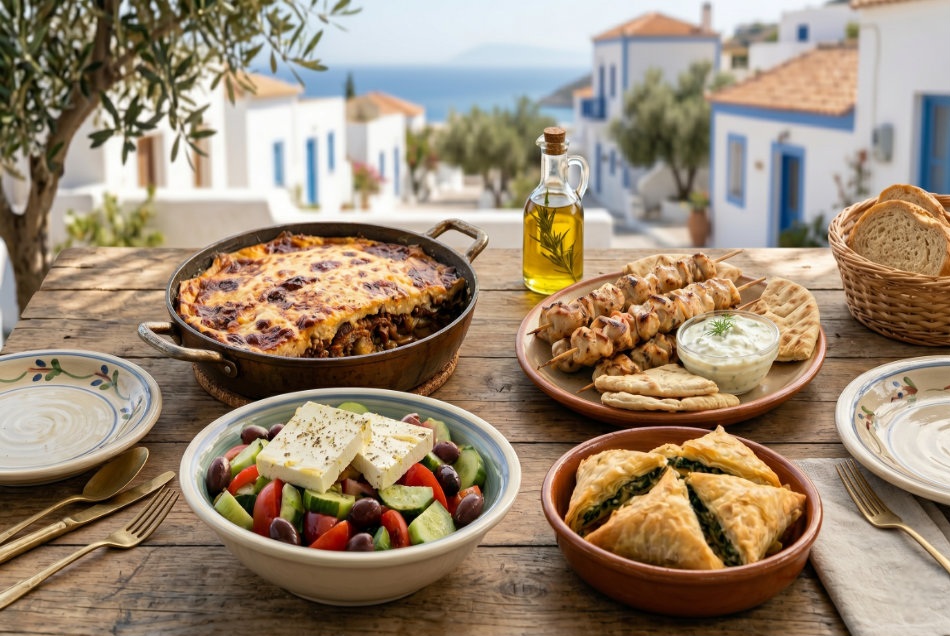
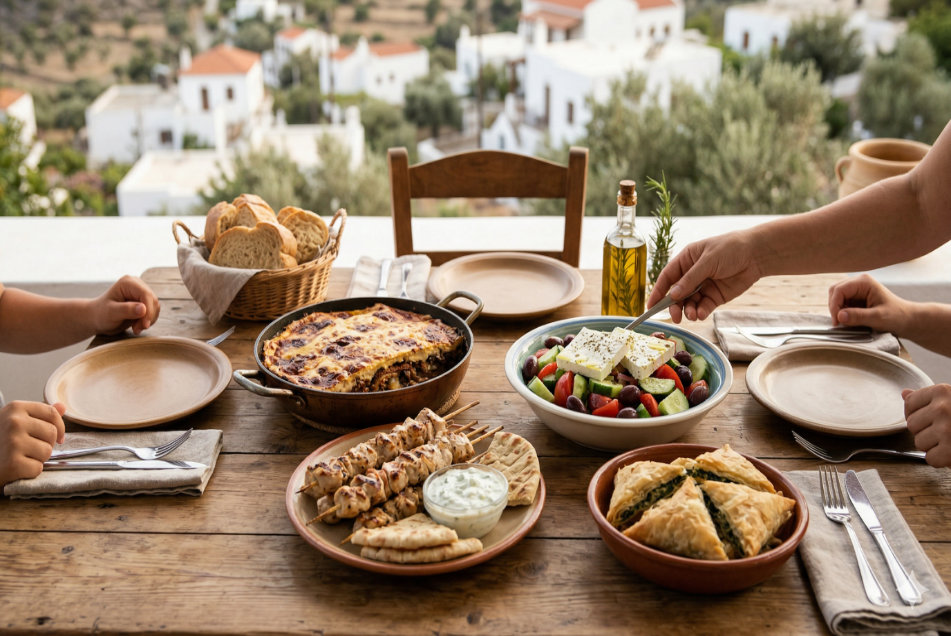
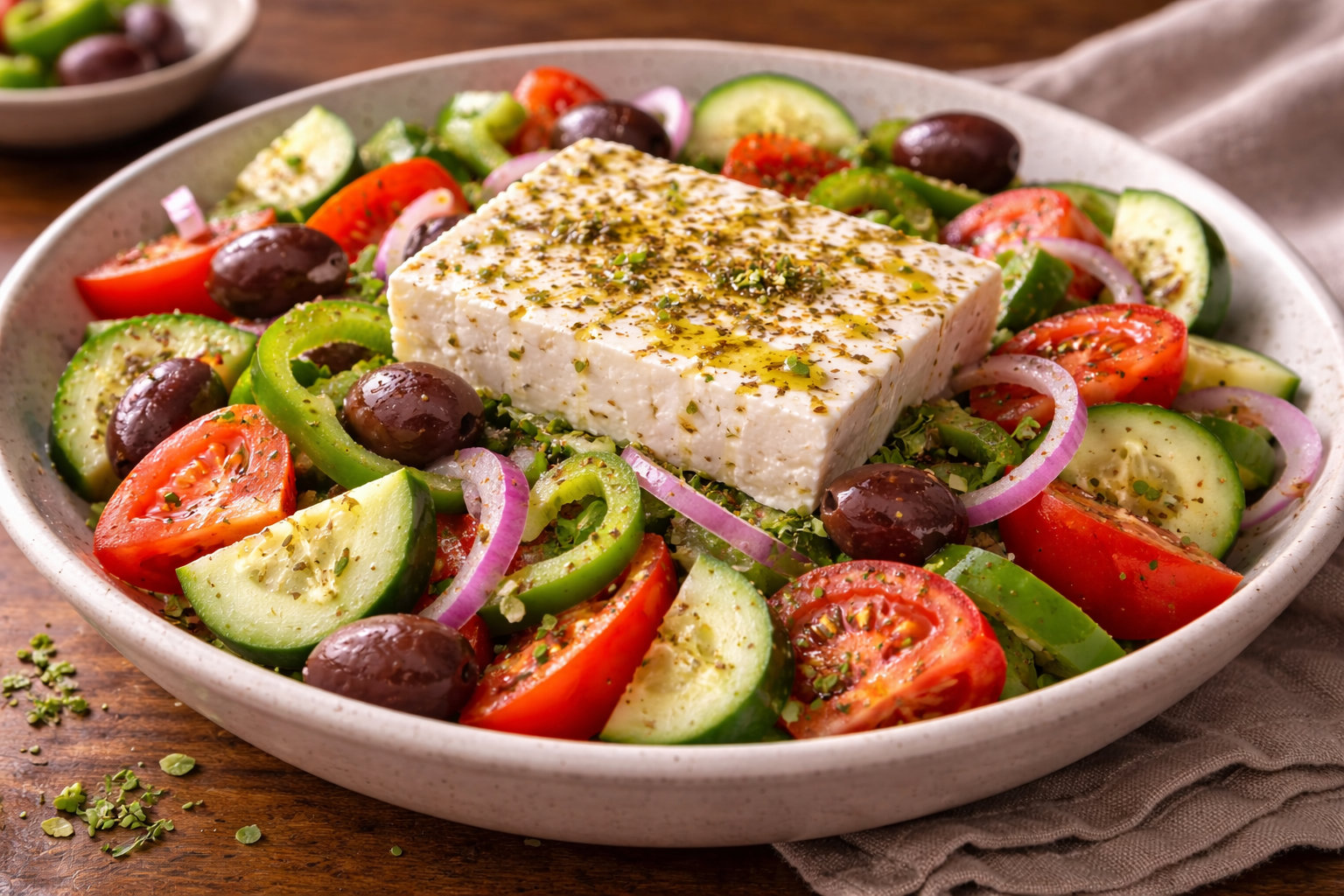
Moussaka is a rich, heavy dish, so you want to balance your table with freshness. A traditional Horiatiki (Greek Village Salad) with crisp cucumbers, ripe tomatoes, and salty feta is the perfect companion. For wine, look for a medium-bodied red with good acidity to cut through the creaminess of the Béchamel—a Xinomavro or a Nero d'Avola works beautifully.
And for dessert? Keep it simple. A few slices of chilled watermelon or a spoonful of Greek yogurt with honey and walnuts is all you need after such a regal meal.
Bringing the Grapevine to Your Home
Cooking Moussaka is a rite of passage. It links us to the kitchens of our ancestors and the slow, rhythmic pace of Mediterranean life. When you pull that golden tray out of the oven, you aren't just serving dinner; you are sharing a piece of Greek history.
So, invite your friends, pour the wine, and break bread together. From our family at Greek Grapevine to yours—Kali Orexi!


0 Comments