Introduction
If you’ve ever been to Greece, or even stepped into a Greek home, you’ll know one thing instantly: food isn’t just food. It’s a way of life. It’s conversation, laughter, storytelling, and sometimes a little friendly debate over who makes the best moussaka (spoiler: it’s always yiayia).
From the smallest island taverna to the Sunday table in a bustling Cypriot kitchen, food lies at the very heart of Greek identity. Every meal tells a story of history, family, and community. And as every Greek will tell you, there’s always room for “just a little more.”
A Bite of History: How Ancient Greece Shaped Modern Plates
Let’s start where everything starts, with the ancient Greeks, because of course, they started everything.
Thousands of years ago, Greek philosophers weren’t just inventing democracy, they were also thinking about dinner. The ancient Greeks believed food connected the mortal and the divine. Offerings of bread, olives, and wine weren’t just snacks, they were sacred gifts to the gods.
Fast forward to today, and you’ll still find olive oil, bread, and wine at nearly every Greek table. These aren’t just ingredients, they’re ancient traditions that survived empires, wars, and more than a few family recipe arguments.
So when you drizzle olive oil over your salad or break fresh bread to share, you’re continuing a ritual that’s thousands of years old, and honestly, that’s pretty epic.
The Family Table: The Real Greek Social Network
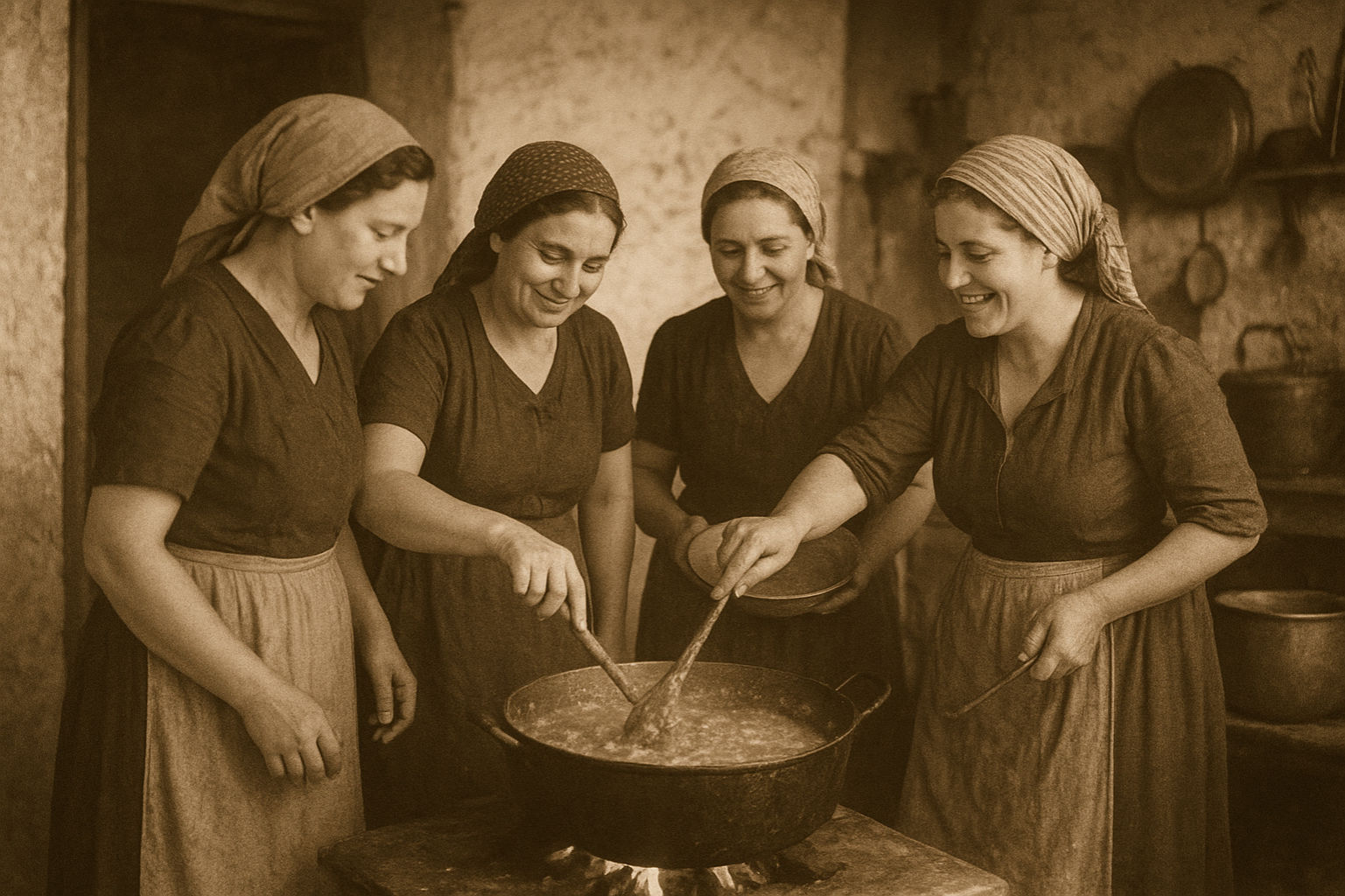
Move over Facebook Greeks have had their own social network for centuries. It’s called the family table.
In Greek culture, meals aren’t eaten in silence. They’re loud, joyful, and often go on for hours. There’s talking, laughter, storytelling, and a chorus of “opa!” every time someone spills the wine.
At the Greek table, you’ll find connection and belonging. Meals are how families stay close, how friends become family, and how every important life moment, from baptisms to name days, is celebrated.
And if you think you can get away with saying “no” to seconds, think again. A Greek grandmother (yiayia) will always find a way to slip another dolma onto your plate. Resistance is futile.
Simple Ingredients, Big Flavours
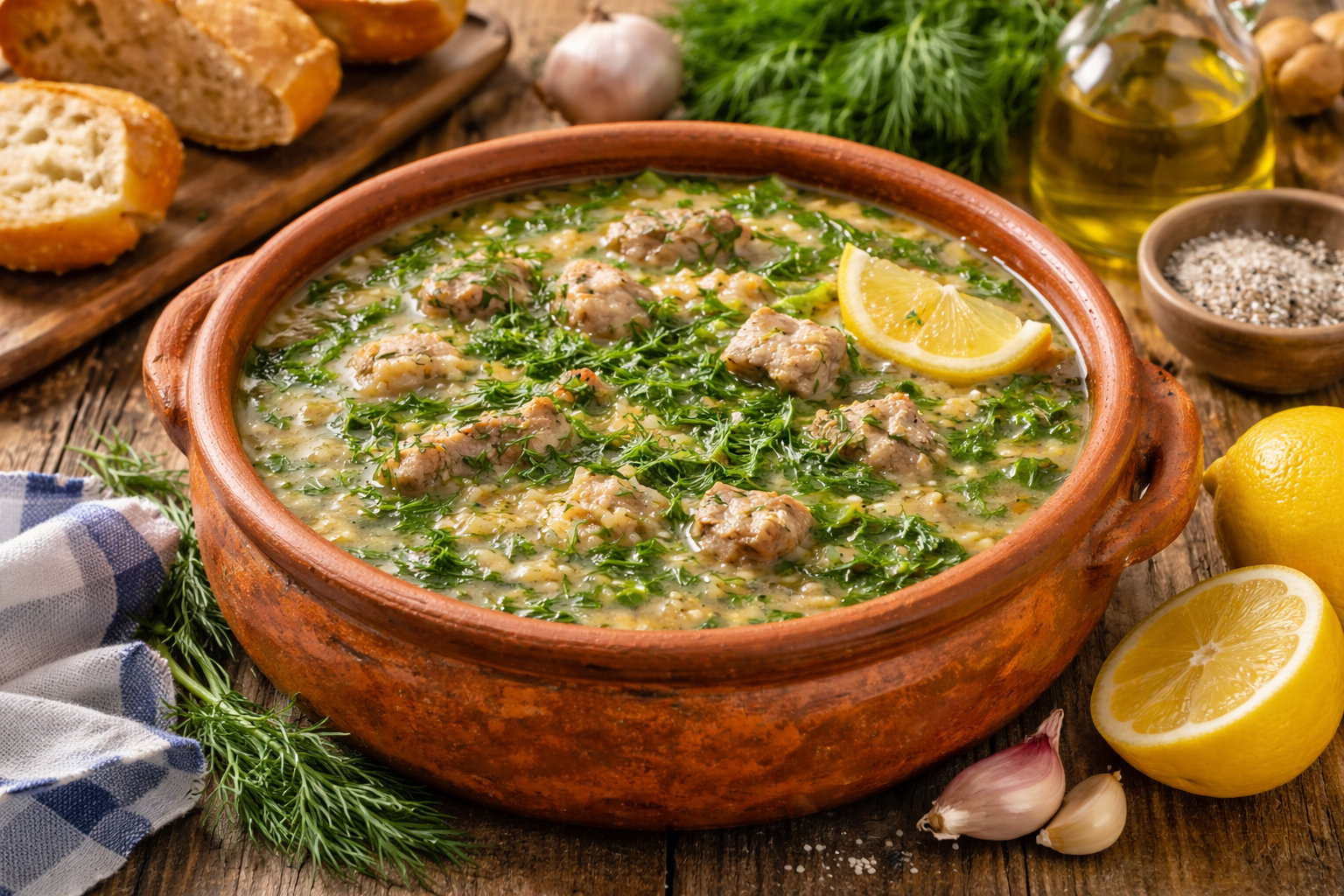
Greek cuisine isn’t about fancy techniques or twenty-step recipes. It’s about fresh ingredients and honest flavours.
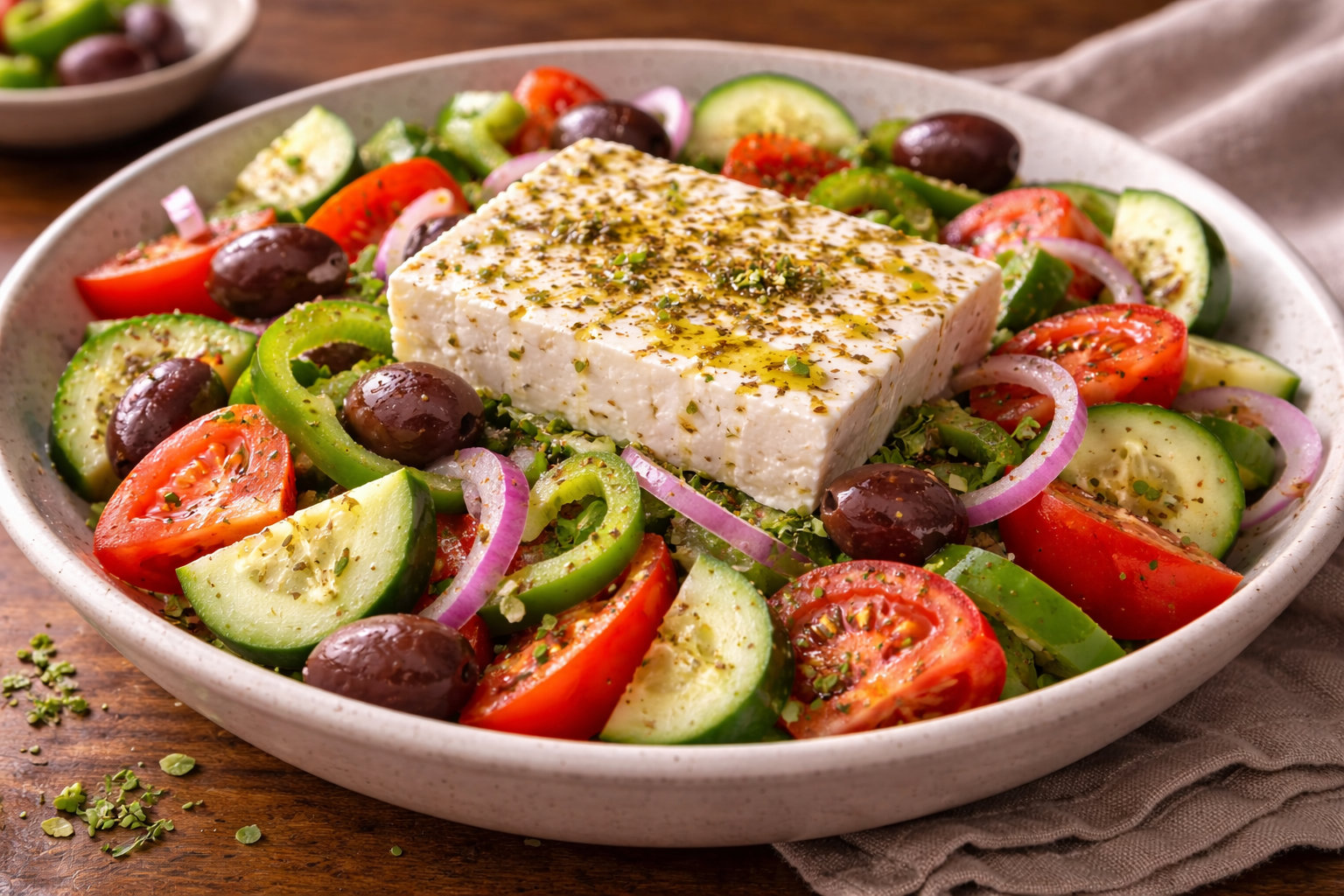
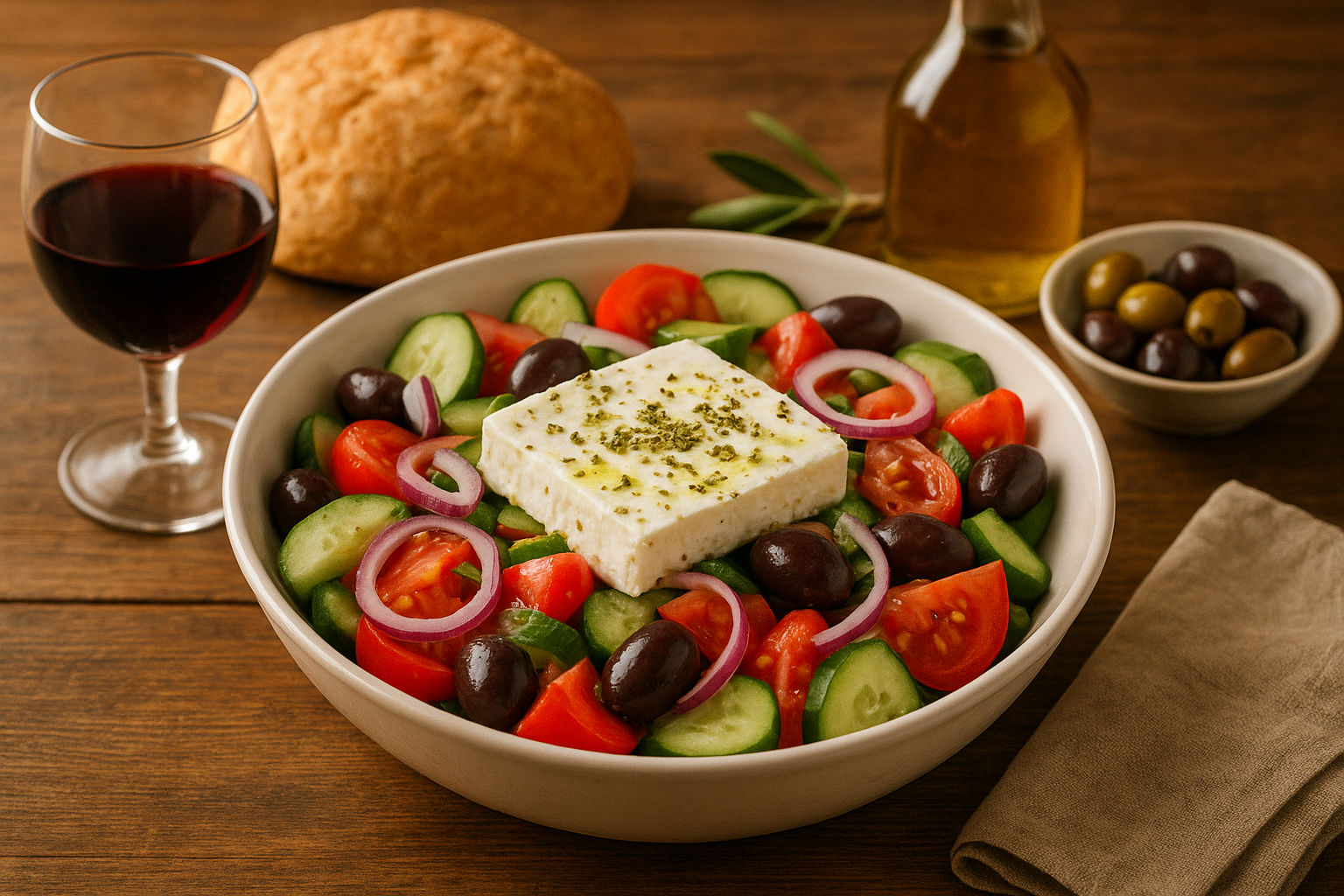
Tomatoes that actually taste like tomatoes. Olive oil that’s liquid gold. Herbs picked straight from the garden.
From a humble Greek salad to a slow-cooked stifado, every dish is a lesson in balance, simple, healthy, and bursting with sunshine. The Mediterranean diet (which, let’s be honest, the Greeks basically invented) is famous for being one of the healthiest in the world. But it’s also one of the most joyful.
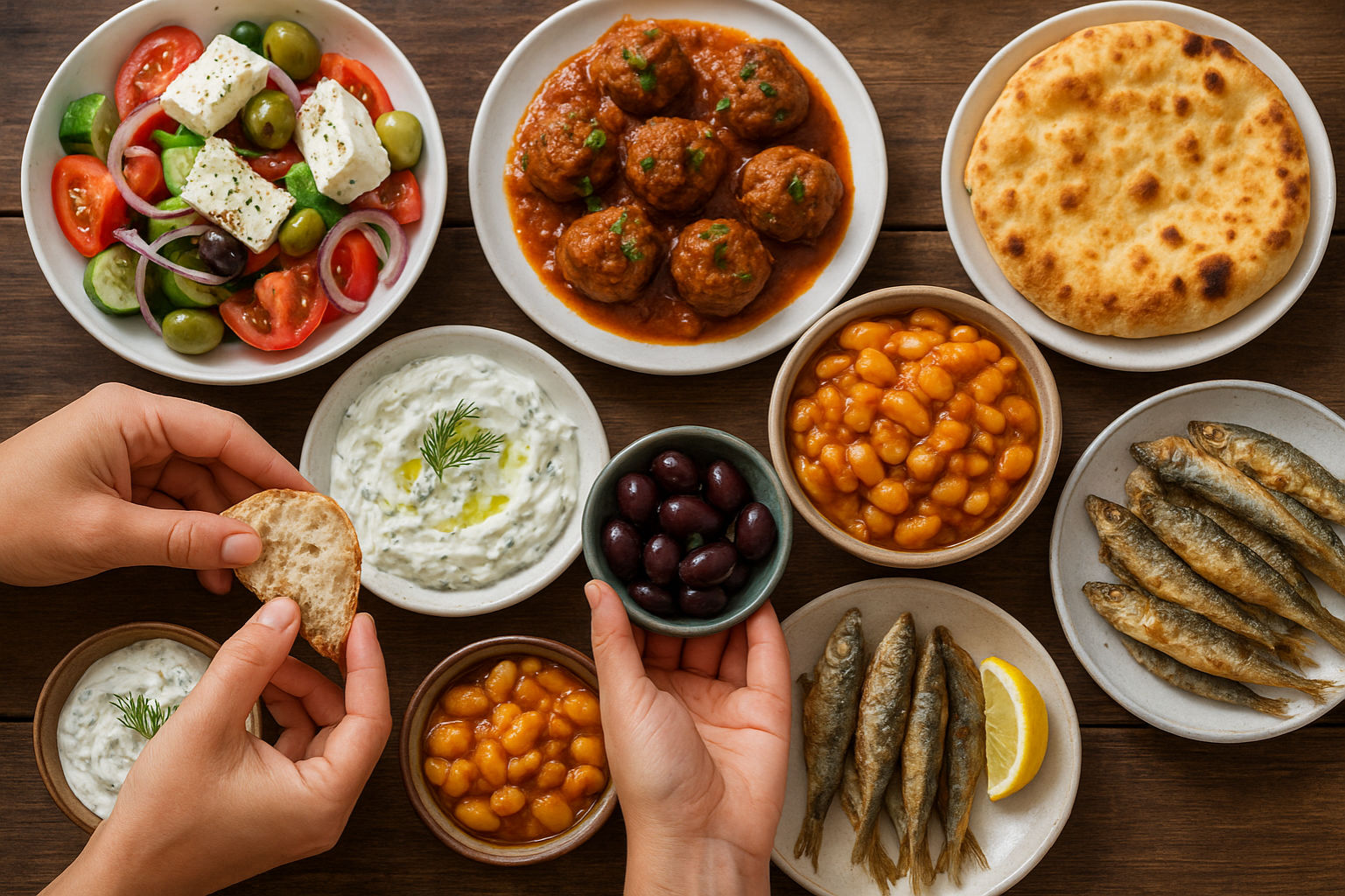
There’s something magical about sharing meze, small plates passed around the table, while everyone reaches for the last piece of halloumi at the same time. It’s delicious chaos.
Feasting and Festivities: Food as Celebration
Greeks don’t need much of an excuse to celebrate. Easter, Christmas, name days, national holidays, each one comes with its own special dish.
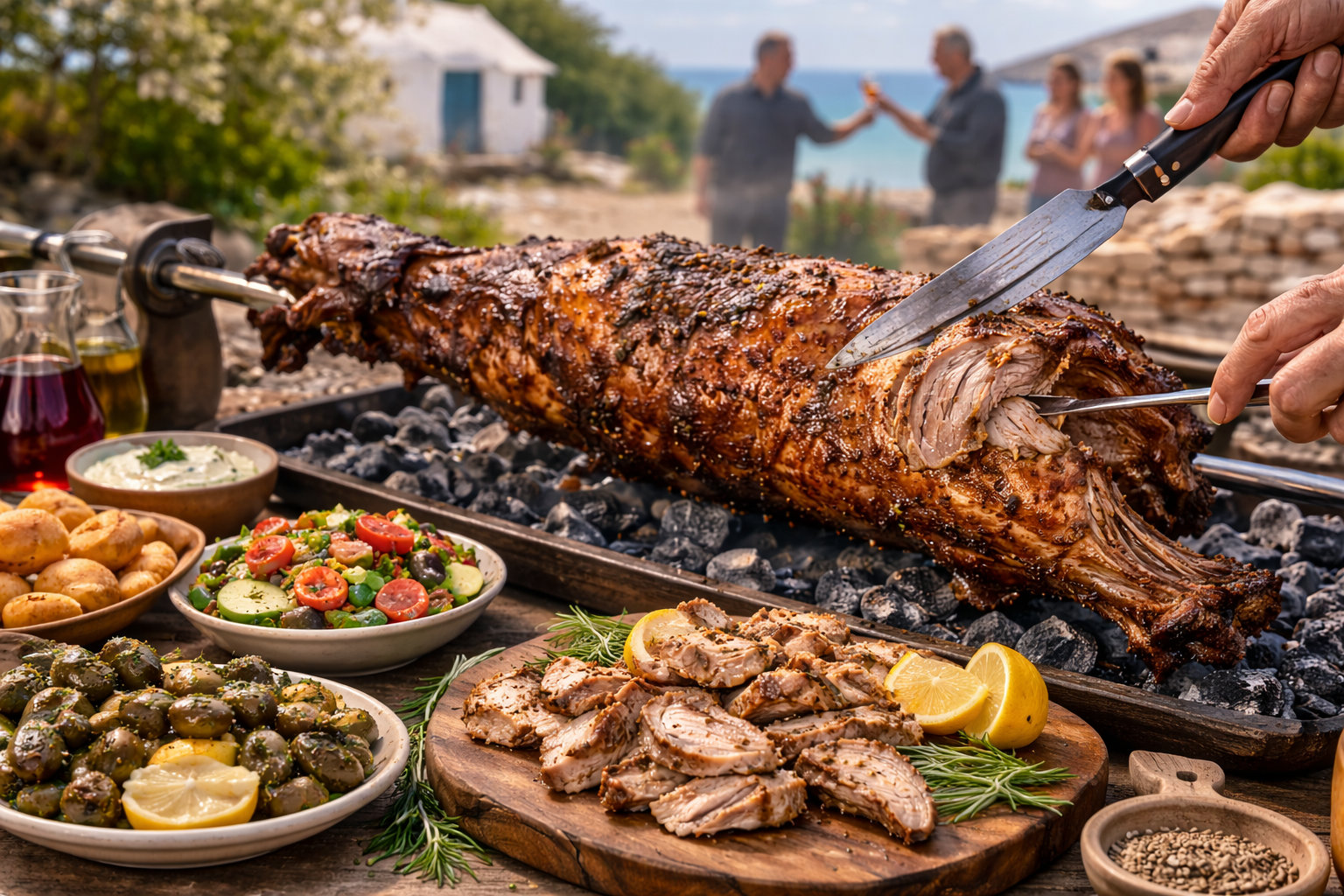
At Easter, lamb is slow-roasted on the spit, filling the air with smoky, mouth-watering aromas. At Christmas, the kitchen smells of honey, cinnamon, and freshly baked melomakarona. Even funerals have koliva, a sweet wheat dish symbolizing rebirth.
Every celebration is tied to food that tells a story, about faith, history, and family. To eat together in Greece is to celebrate life itself.
The Power of Sharing: Philoxenia on a Plate
One of the most beautiful Greek words is philoxenia, which means “friend to the stranger.” It’s the ancient tradition of hospitality, welcoming others with open arms and full plates.
In Greece, if someone visits your home, they won’t leave hungry. Even if you weren’t expecting company, somehow there’s always bread, olives, and cheese on the table within minutes. (We’re not sure how yiayias do it, but it’s definitely some kind of magic.)
This spirit of generosity and sharing is what makes Greek food so special. Every meal is an invitation, to connect, to laugh, to belong.
Beyond Borders: The Global Love for Greek Cuisine
Today, Greek cuisine has made its way around the world. From London to New York to Sydney, you’ll find Greek tavernas serving souvlaki, tzatziki, and baklava to smiling crowds.
But it’s more than just tasty food, it’s an export of culture, warmth, and philosophy. Wherever Greeks go, they bring their traditions with them: good food, good wine, and even better company.
And honestly, who can resist a plate of perfectly grilled octopus with a squeeze of lemon?
Conclusion: More Than a Meal
To understand Greece is to understand its food. Every dish, whether it’s a comforting moussaka, a plate of kleftiko, or a simple piece of bread dipped in olive oil, is a reflection of what it means to be Greek.
It’s about connection, celebration, and community. It’s about slowing down and enjoying life one bite at a time. It’s about knowing that even if times are hard, there’s always something to share at the table.
So next time you sit down to a Greek meal, remember, you’re not just eating. You’re tasting history, love, and the heart of an entire culture.