Introduction
Kalos ilthate! Welcome, my dear, come in and sit down. Can I make you a Greek coffee? Or perhaps a little piece of spoon sweet? You look like you need a proper meal, and in my kitchen, nobody leaves with an empty stomach. That is the first rule of being a Greek YiaYia (grandmother)!
When people ask me for the secrets of authentic Greek food, they expect me to show them a hidden spice cabinet or a complicated technique. But the truth is much simpler. Our traditional Greek recipes are built on three things: the freshest ingredients from the earth, a very generous pour of golden olive oil, and a heart full of agapi —love.
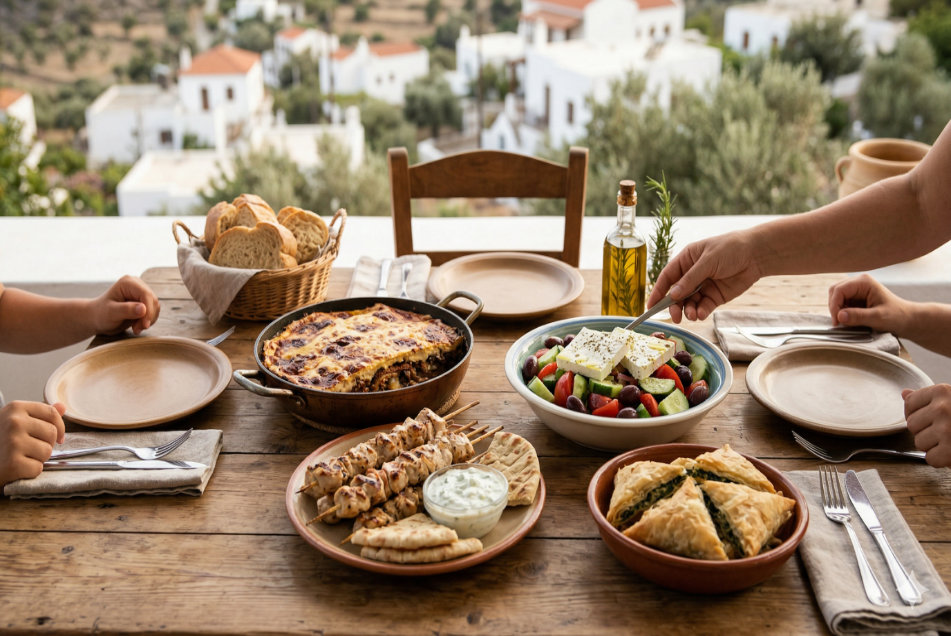
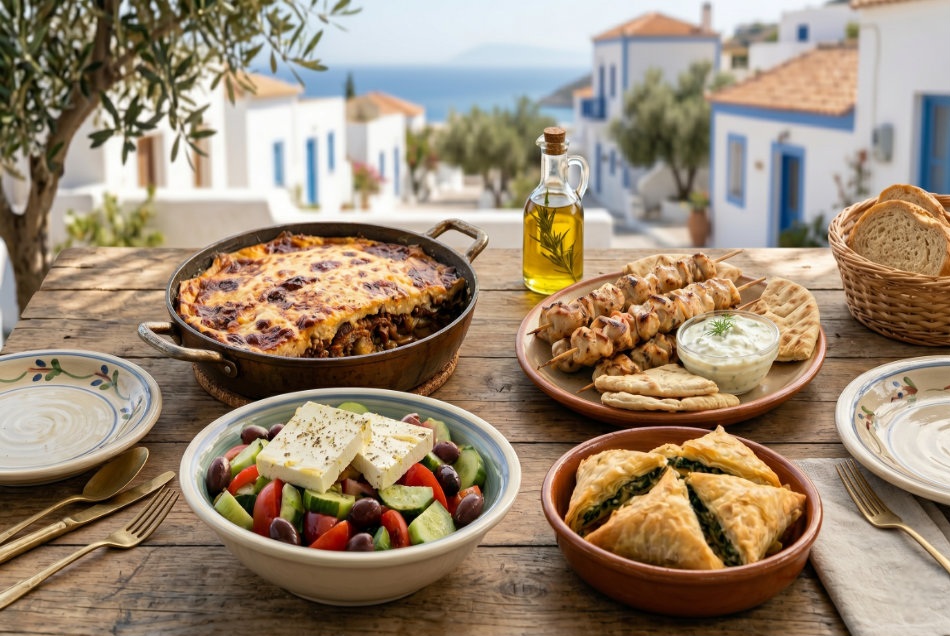
Today, I want to share the dishes that have defined our family table for generations. These aren't just meals; they are memories. Whether it’s the sound of phyllo pastry crinkling or the smell of cinnamon and cloves wafting from the oven, these recipes are the heartbeat of a Greek home. So, tie your apron, and let’s get cooking!
The Foundation of the Greek Table: It Starts with the Soil
Before we dive into the recipes, we must talk about the ingredients. You cannot rush a Greek family dinner. In Greece, we cook with the seasons. We use tomatoes that taste like the sun, wild greens (horta) picked from the hillsides, and lemons that are so fragrant they perfume the whole house.
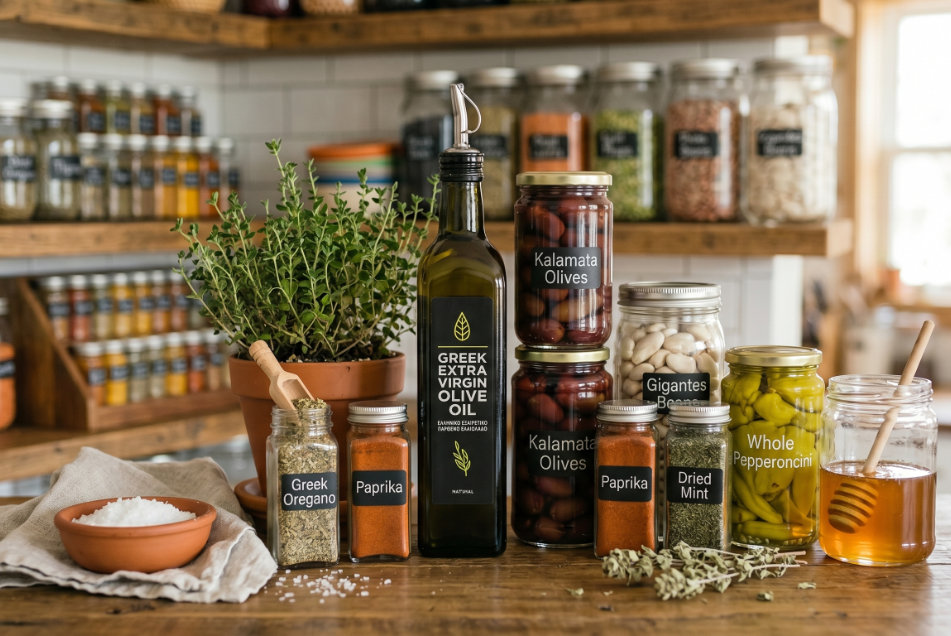
If you want your cooking to taste like mine, you must find a good olive oil. It should be extra virgin and green, like the groves in Kalamata or Crete. It is the liquid gold that binds our Greek cooking together. And don't be shy with the herbs! Dried oregano, mint, and parsley are the "holy trinity" of our spice rack. When you use these, you aren't just seasoning food; you are bringing the scent of the Mediterranean into your home.
Many of these easy Greek meals were born out of necessity—taking simple beans, vegetables, and grains and turning them into a feast fit for a king. That is the beauty of our culture; we find abundance in the simple things.
Spanakopita: The Crispy, Salty Queen of Pies
No Greek gathering is complete without Spanakopita. This spinach and feta pie is perhaps the most famous of all our "pitas." Every YiaYia has her own secret—some add leeks, some add a pinch of nutmeg—but the goal is always the same: a filling that is savory and moist, encased in layers of buttered, flaky phyllo dough.
The trick to a perfect Spanakopita is managing the moisture. You must squeeze the spinach until it is dry, or you will have a soggy bottom, and we don't want that! I love making this for my grandkids because it’s a way to get them to eat their greens without a single complaint. If you want to master the art of the perfect appetizer, you should also learn how to make authentic Tzatziki to serve alongside it. The cool cucumber and garlic are the perfect partners for the salty feta.
Pastitsio and Moussaka: The Comforting Layers of Home
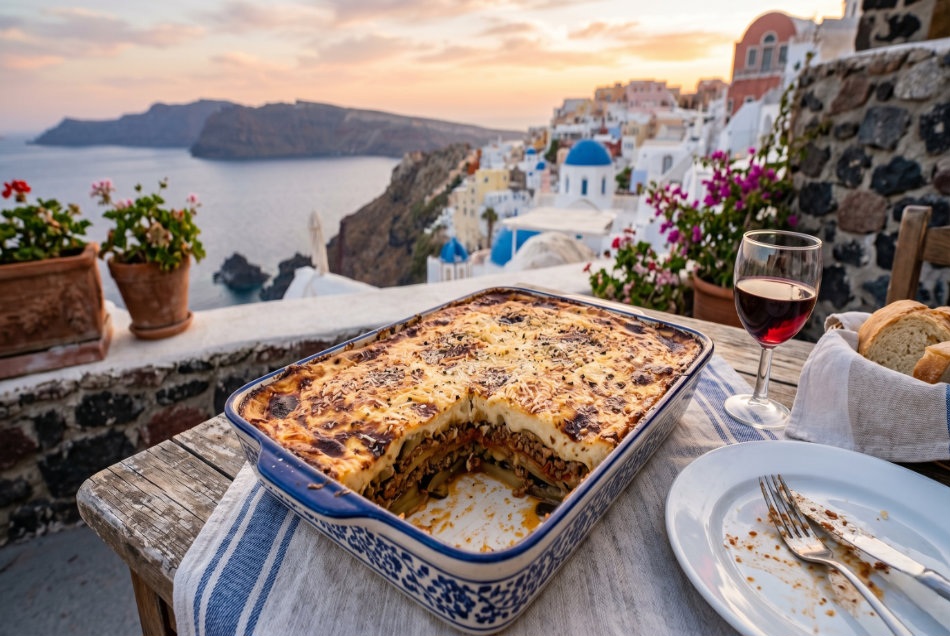
If you ask any Greek child what their favorite "YiaYia food" is, they will likely scream "Pastitsio!". While the world loves our Moussaka (and who can blame them? Those layers of eggplant and spiced meat are divine!), Pastitsio is the ultimate Greek comfort food. It is our version of lasagna, but with a Greek twist that makes it so much better.
Pastitsio features tubular pasta mixed with cheese and egg, topped with a thick layer of aromatic meat sauce simmered with cinnamon and allspice. But the "crown" of the dish is the Béchamel sauce. It must be thick, creamy, and baked until it has those beautiful brown spots on top. It feels like a warm hug for your stomach.
When you are preparing these traditional Greek recipes, don't be afraid of the cinnamon in the meat sauce. It doesn't make it sweet; it makes it deep and mysterious. If you are looking for a slightly lighter but equally classic main course, you might try our step-by-step Moussaka guide, which focuses on roasting the vegetables rather than frying them.
The Simplicity of the Horiatiki (Greek Salad)
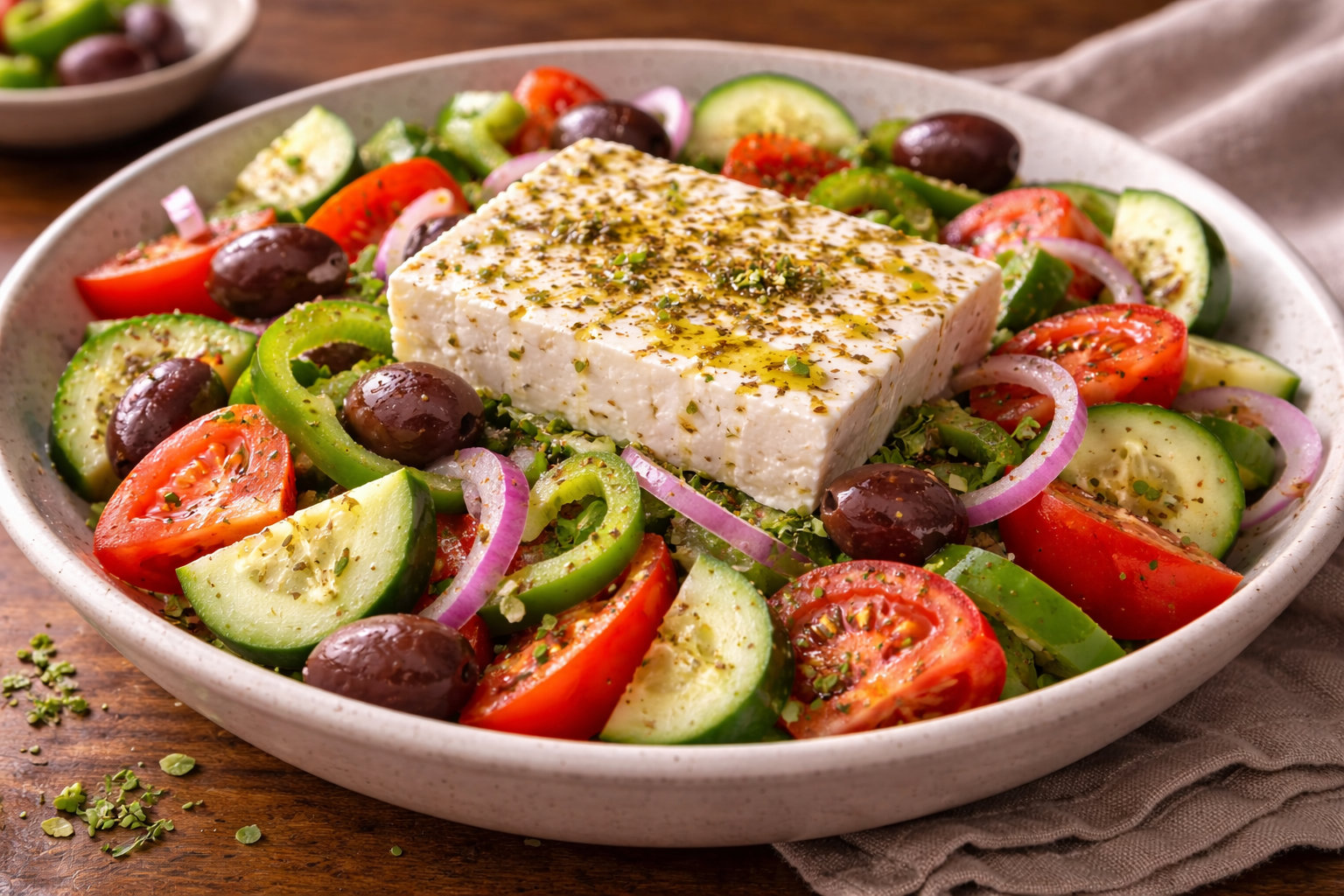
You might think you know how to make a Greek salad, but let YiaYia tell you a secret: there is NO lettuce in a real Horiatiki! A traditional village salad is a humble dish, but it requires the best ingredients because there is nowhere for them to hide.
You need chunky tomatoes, crisp cucumbers, red onion, Kalamata olives, and a big slab of feta cheese right on top. Don't crumble the feta—leave it whole so everyone can break off what they want! Sprinkle it with a lot of dried oregano and a splash of red wine vinegar. The best part is the "papi" at the end—that’s when you take a piece of crusty bread and soak up all the juices and olive oil left at the bottom of the bowl. That, my dear, is where the flavor lives!
For those who want to expand their vegetable repertoire, I always suggest pairing your salad with some homemade Dolmades (stuffed grape leaves). They are bite-sized pieces of heaven that show you really know your way around a Greek kitchen.
Sweet Endings: Baklava and Galaktoboureko
A Greek meal never truly ends; it just transitions into coffee and dessert. If you want to impress your family, Baklava is the way to go. It’s a labor of love—layering nuts, spices, and phyllo—but the smell of the honey syrup hitting the hot pastry is something you will never forget.
If you prefer something creamy, Galaktoboureko (custard pie) is my personal favorite. It’s a semolina-based custard wrapped in phyllo and soaked in lemon-scented syrup. It’s best eaten warm, when the custard is still slightly wobbly. These authentic Greek desserts are the perfect way to show your family that you care.
Tips for Cooking Like a Greek YiaYia
Before you go and start your feast, let me give you a few final pieces of advice for making these easy and authentic recipes:
- Don't Measure with Your Eyes, Measure with Your Heart: I rarely use a measuring cup. If it looks like it needs more garlic, add more garlic!
- Feed More Than You Need: In Greece, we always cook for ten even if only five are coming. You never know when a neighbor might stop by. This is Philoxenia—making a stranger feel at home.
- Slow Down: The food tastes better when you aren't rushing. Pour yourself a glass of wine, put on some music, and enjoy the process.
Cooking traditional Greek food is about more than just filling a plate; it’s about keeping a culture alive and bringing people together. When you make these recipes, you are joining a long line of mothers and grandmothers who have used their hands to nourish their families.
I hope these recipes bring as much joy to your table as they have to mine. Now, go! Put the pot on the stove. And don't forget to tell me how it turned out. Kali Orexi! (Good appetite!)


0 Comments