Introduction
If there is one thing Greeks do exceptionally well (besides arguing about who makes the best souvlaki), it’s celebrating Easter with food. Greek Easter isn’t just a meal, it’s an event, a reunion, a marathon of flavour, and possibly the only time of year where eating continuously for 12 hours is socially encouraged.
After the long 40-day Lenten fast, the Easter table explodes with colour, aromas, and dishes that have been passed down through generations. Families gather, cousins appear from nowhere, grandmothers guard their recipes like national secrets, and someone inevitably insists that their lamb is the best in the village.
From roasted lamb and cheese-filled pastries to sweet breads and symbolic red eggs, Greek Easter foods are rich in tradition and meaning. But more importantly, they are delicious enough to make you forget the fasting ever happened.
Let’s take a journey through the foods that make Greek Easter one of the most exciting culinary celebrations in the world.
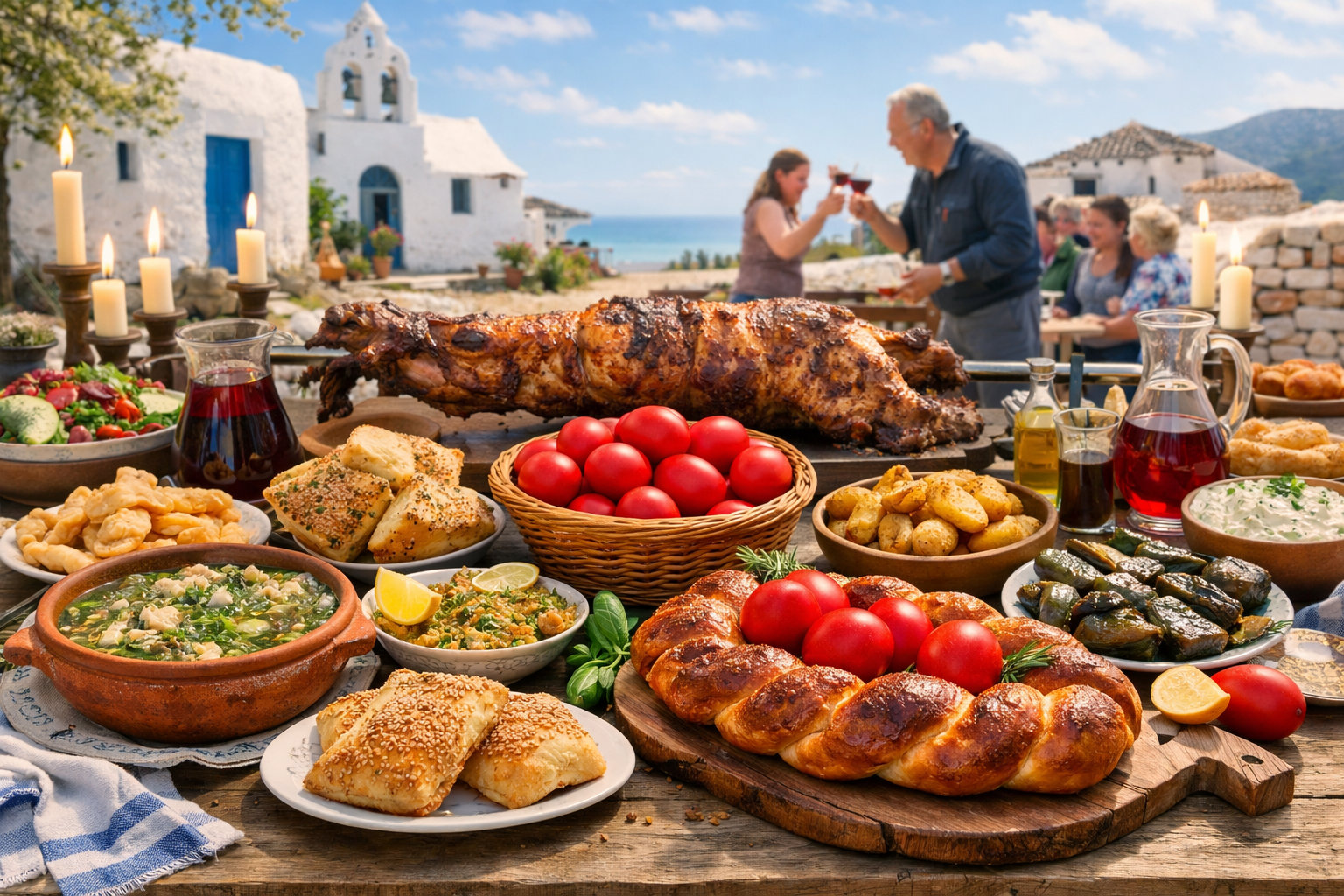
The Midnight Feast: Breaking the Fast
Greek Easter technically begins late on Holy Saturday night, when churches fill with candlelight and the words “Christos Anesti!” (Christ is Risen) echo through the night.
And what happens immediately afterwards?
People go home and eat. A lot.
After weeks of fasting, the first meal is both symbolic and comforting.
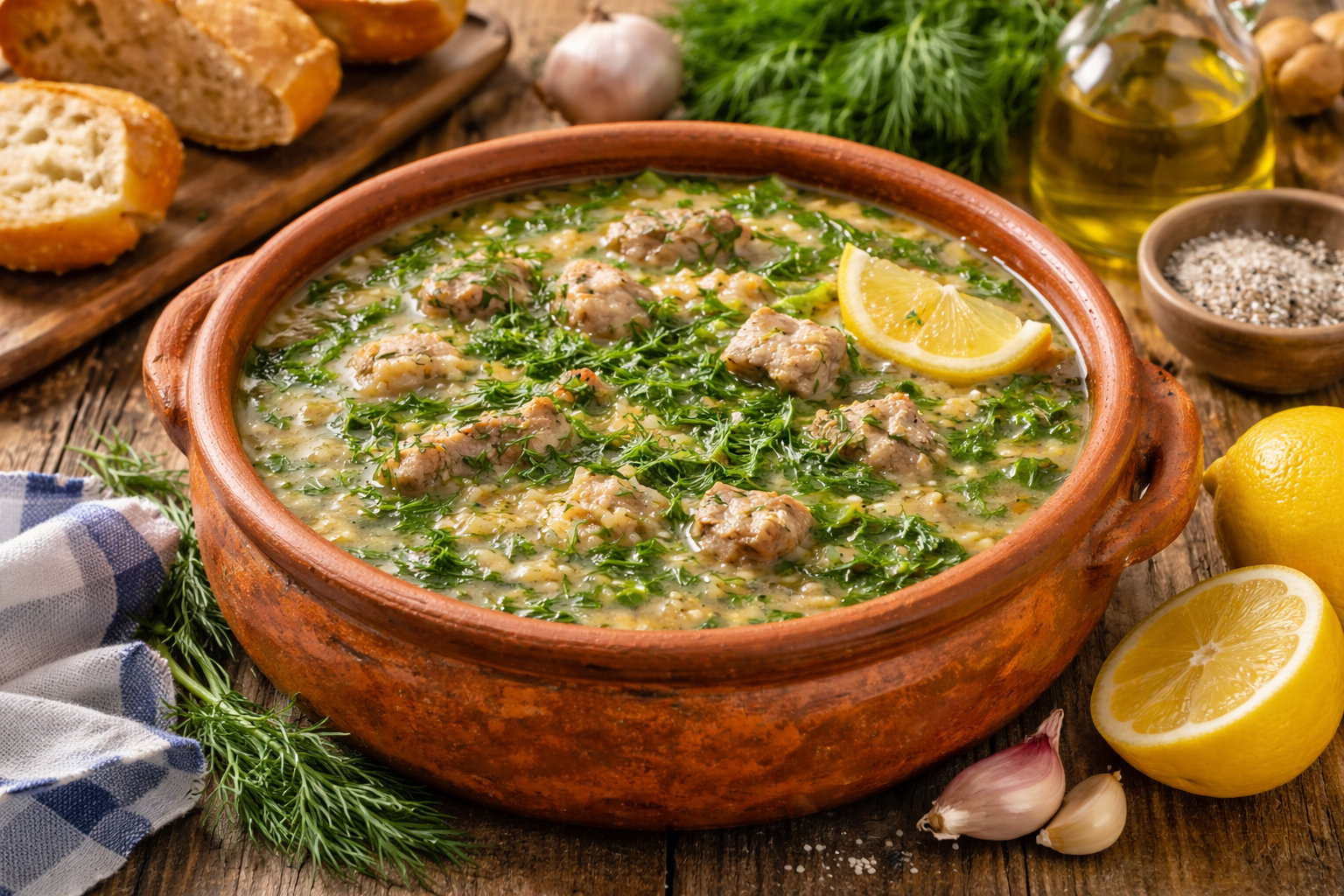
– The Traditional Easter Soup
Magiritsa is the classic soup served right after midnight mass. It’s made from lamb offal, herbs, onions, lettuce, and finished with a silky avgolemono (egg-lemon) sauce.
Now, magiritsa divides people into two groups:
-
- People who love it.
- People who politely eat a little to respect tradition.
Either way, it plays an important role. Historically, it allowed families to use the entire lamb that would be roasted the next day. It’s also light enough to gently break the fast before the feast on Easter Sunday.
Plus, after standing for hours in church holding candles, even the sceptics usually admit that a warm bowl of soup at midnight is surprisingly perfect.
See Our Recipe: Magiritsa Soup Recipe
The Star of the Table: Roast Lamb
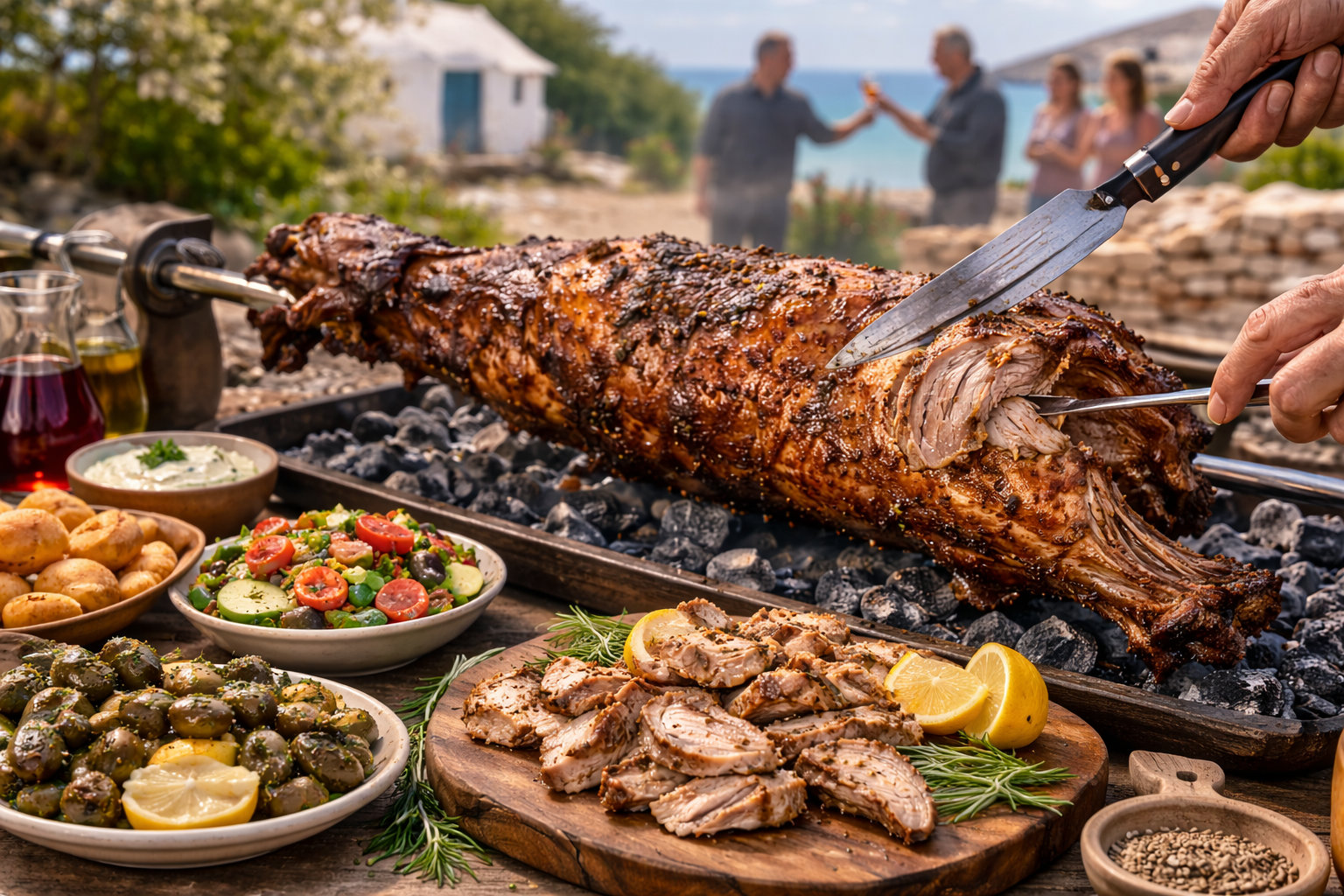
If Greek Easter had a celebrity, it would unquestionably be roast lamb.
On Easter Sunday morning, the smell of lamb roasting over charcoal fills entire neighbourhoods. Families gather outdoors, music plays, and someone is always in charge of slowly turning the spit.
Usually, that person takes the job very seriously.
Why Lamb?
Lamb represents sacrifice and renewal in Christian tradition. But for most Greeks, it also represents something simpler:
An incredible meal worth waiting all year for.
The lamb is typically seasoned with:
-
- Lemon
- Oregano
- Garlic
- Olive oil
- Salt and pepper
It cooks slowly for hours, creating crispy golden skin and tender meat that practically falls apart.
Of course, while the lamb cooks, people snack on mezze, drink wine, debate politics, and loudly insist they are “not hungry yet.”
No one believes them.
See Our Recipe: BBQ Roast Lamb Recipe
Flaounes – The Pride of Cypriot Easter
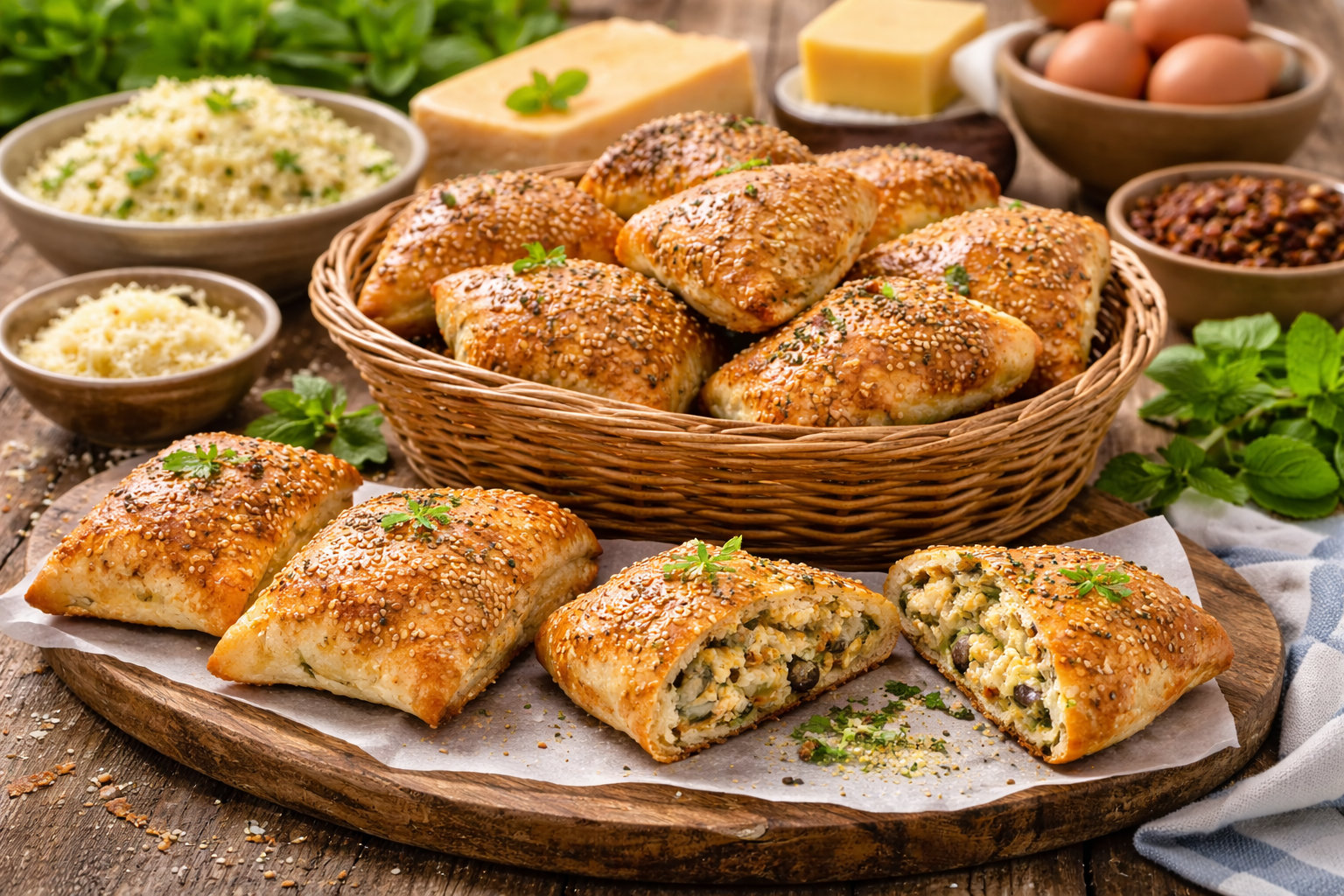
In Cyprus especially, Easter would be unimaginable without flaounes.
These beautiful pastries are filled with a mixture of cheese, eggs, mint, and sometimes raisins. The filling is rich, slightly tangy, and incredibly aromatic.
Flaounes are usually baked on Holy Saturday, and the preparation itself is a social event. Families gather in the kitchen, folding dough, tasting the filling, and arguing about whether raisins belong inside.
(Some say yes. Others say absolutely not.)
What makes flaounes special is that every family has its own version. Some are small and neat, others are big and rustic, but they all carry the same comforting flavour of tradition.
And if you visit a Greek or Cypriot home during Easter, you will almost certainly hear the words:
“Take some flaounes with you.”
Refusing is not an option.
See Our Recipe: Flaounes Recipe
Tsoureki – The Sweet Bread of Easter
Once the savoury dishes have had their moment, it’s time for something sweet.
Enter tsoureki, the iconic Greek Easter bread.
This soft, braided bread has a slightly sweet flavour and a fluffy texture that pairs perfectly with coffee. What makes tsoureki special is the use of unique aromatic spices such as:
- Mahlepi
- Mastiha
- Orange zest
These ingredients give the bread its distinctive fragrance that instantly reminds many Greeks of Easter.
Traditionally, tsoureki is decorated with red-dyed eggs baked directly into the braid, symbolising the blood of Christ and the promise of new life.
Of course, the real challenge comes the next day when everyone argues over who gets the biggest slice.
See Our Recipe: Tsoureki Recipe

The Famous Red Eggs (and the Cracking Game)
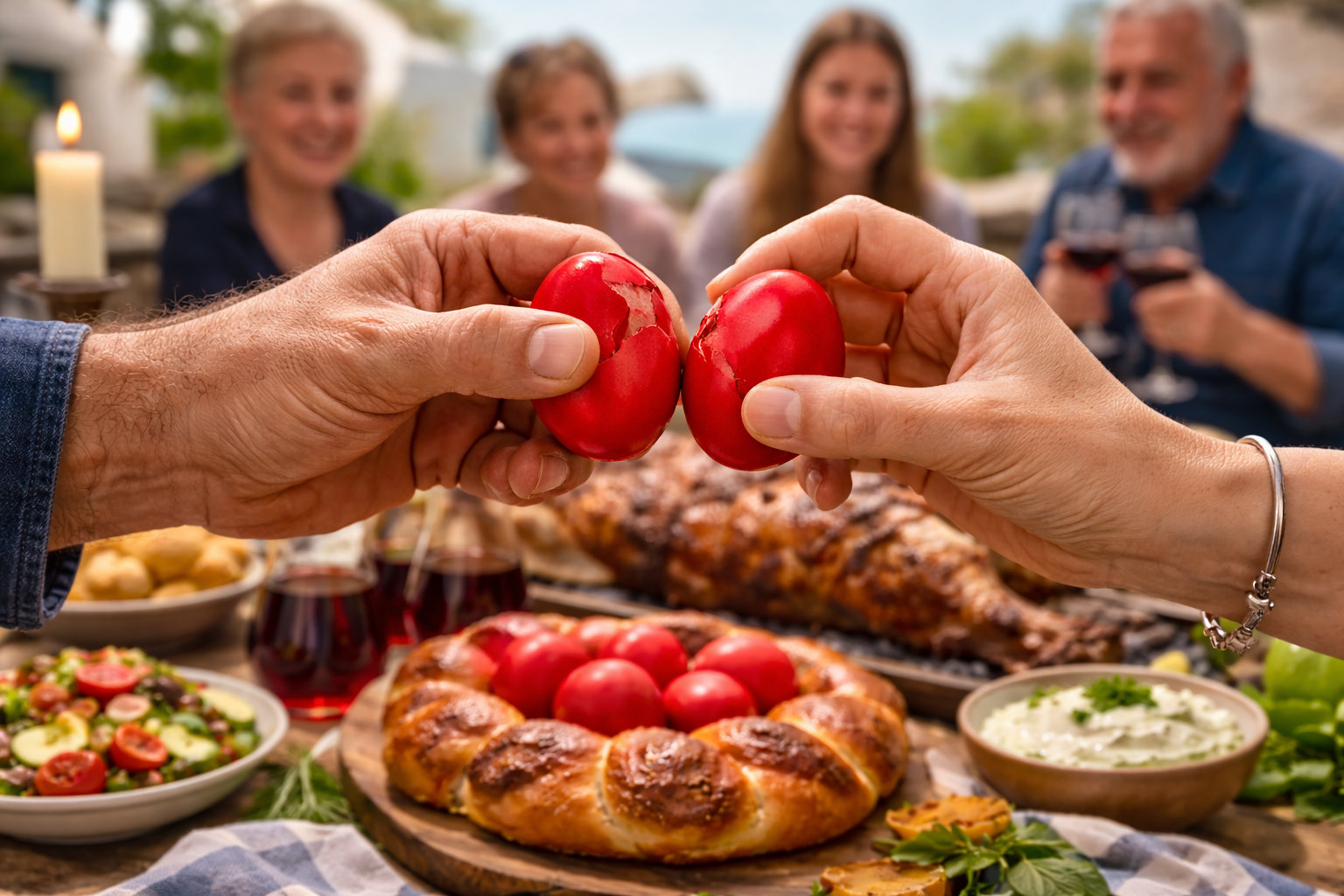
No Greek Easter table is complete without kokkina avga, the bright red eggs.
The eggs are dyed red to symbolise the blood of Christ and rebirth. But their most important role might actually be in the famous egg-cracking game.
The rules are simple:
- Two people tap their eggs together.
- One hits the top, the other the bottom.
- Whoever’s egg doesn’t crack wins.
What starts as a friendly game often turns surprisingly competitive. Some people claim they have secret egg-selecting strategies. Others swear certain shapes are stronger.
In the end, though, it’s just an excuse to laugh, eat eggs, and declare victory over your cousins.
See Our Recipe: Easter Red Eggs Recipe
Easter Sweets and Desserts
After a large Easter meal, logic would suggest dessert might not be necessary.
But this is Greek Easter.
Of course there is dessert.
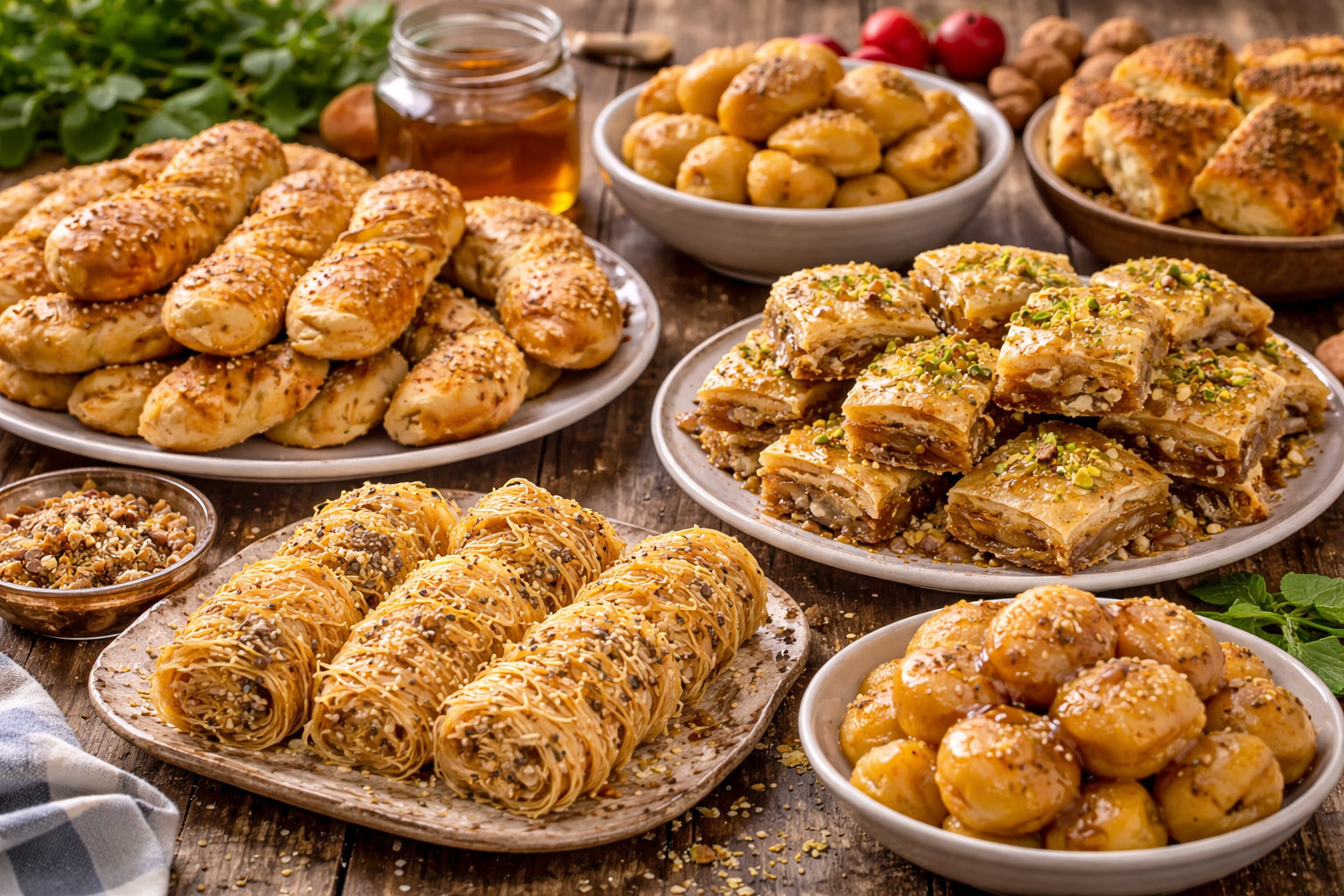
Popular Easter treats include:
Koulouria – buttery biscuits often flavoured with orange or vanilla.
Baklava – layers of pastry, nuts, and honey syrup.
Kataifi – shredded pastry filled with nuts and syrup.
Loukoumades – golden fried dough balls drizzled with honey.
Even when everyone claims they are “completely full,” these sweets somehow disappear quickly.
It’s one of the great mysteries of the Easter table.
See Our Recipe: Koulouria Recipe / Baklava Recipe / Kataifi Recipe / Loukoumades Recipe
The Side Dishes That Complete the Feast
While lamb might steal the spotlight, the supporting dishes are just as important.
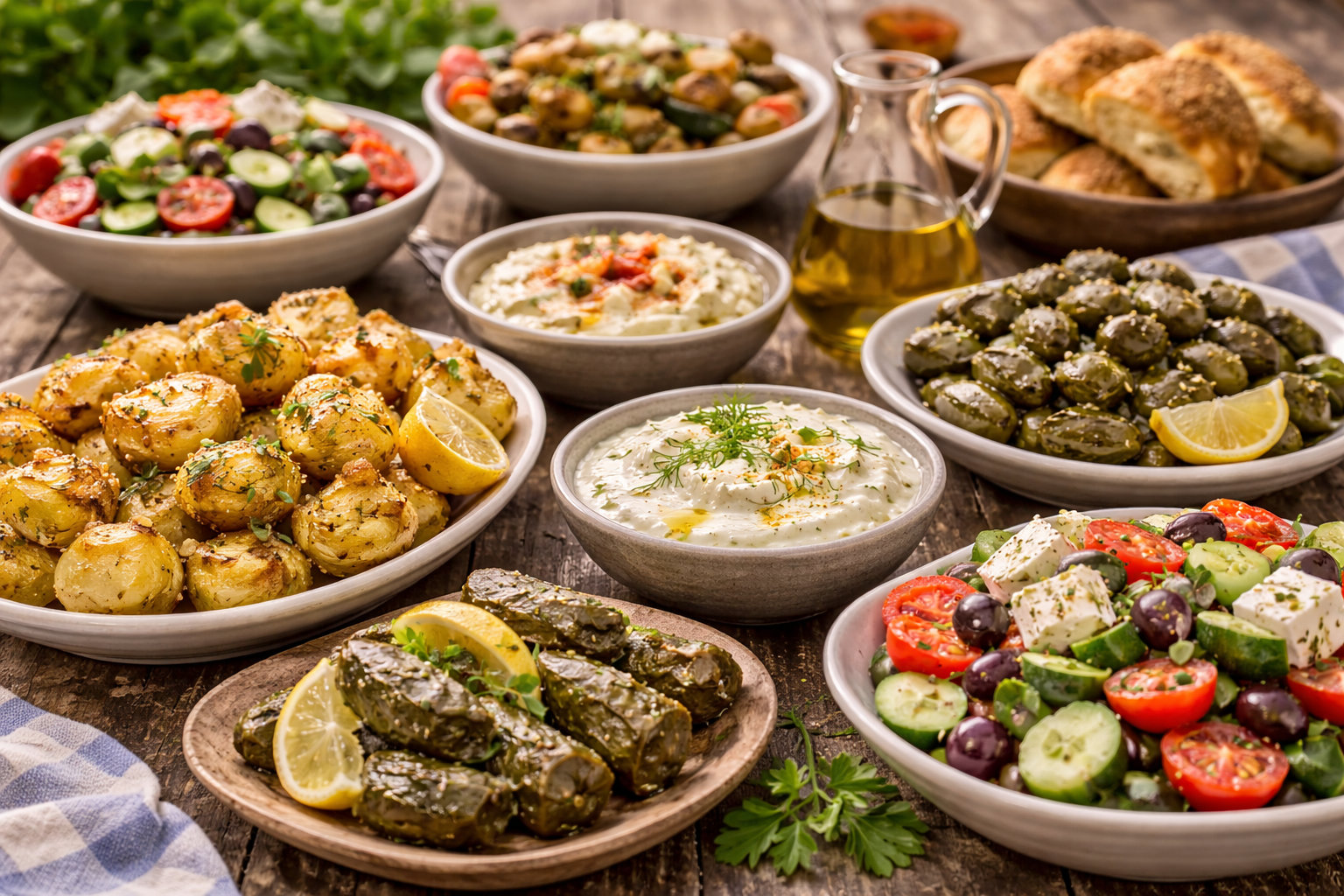
Greek Easter tables often include a colourful spread of sides such as:
-
- Lemon roasted potatoes
- Fresh village salads
- Tzatziki or yoghurt dips
- Stuffed vine leaves
- Grilled vegetables
These dishes balance the richness of the meat and add freshness to the meal.
They also give people something to snack on while pretending they’re waiting patiently for the lamb.
See Our Recipe: Tzatziki Recipe / Stuffed Vine Leaves Recipe
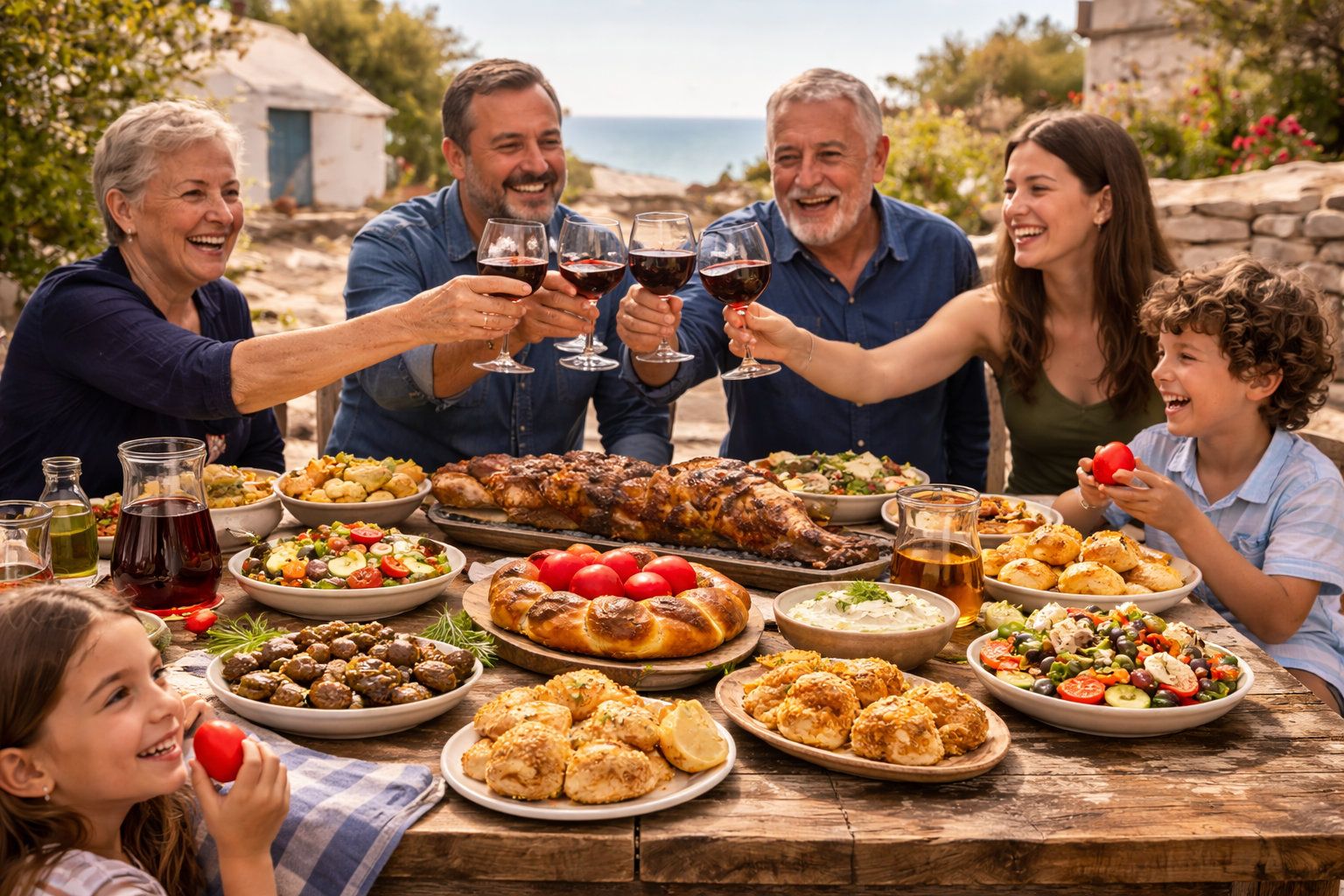
The Real Secret Ingredient: Family
The truth is that Greek Easter foods are only part of what makes the celebration special.
The real magic comes from family and community.
It’s the laughter around the table.
It’s the shared memories of grandparents teaching recipes.
It’s the stories repeated every year about past Easter feasts.
Food becomes the centre of the gathering, but what people truly remember is the feeling of being together.
And maybe also the person who accidentally burned the lamb that one year.
Conclusion
Greek Easter is one of the most joyful and delicious celebrations in Greek culture. After weeks of fasting, families gather to enjoy traditional foods that have been prepared the same way for generations.
From midnight magiritsa soup to slow-roasted lamb, from cheese-filled flaounes to sweet tsoureki and red eggs, every dish carries meaning, history, and incredible flavour.
But more than anything, the Greek Easter table represents togetherness, celebration, and the simple joy of sharing food with the people you love.
And if you leave the table feeling slightly overfull, don’t worry.
That just means you celebrated properly.
Tips
Start preparations early – Many Easter foods like tsoureki and flaounes take time to prepare.
Use fresh herbs and good olive oil – Greek cooking is simple, so quality ingredients make a huge difference.
Cook the lamb slowly – Low and slow roasting creates tender, flavourful meat.
Don’t skip the red eggs – They are a fun tradition everyone enjoys.
Make extra desserts – Trust me, they will disappear quickly.